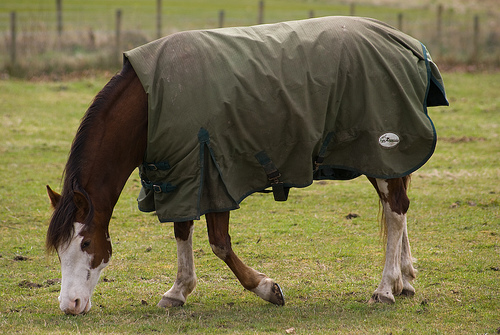
 Of all animals, horses seem to pull off the blanket look best. You can try putting a blanket on your cat or dog, but usually the pet will simply slight right out from under it and run away. Horses, however, typically require a blanket as they go about their business between riding and carting supplies around. Selecting the correct blanket for your horse is pretty important though as just any old blanket is likely to cause some problems if not attended to. You need to choose wisely, so here’s a little guide to help you consider some important aspects regarding your horse’s blanket.
Not every blanket will work for every horse. For one, you’ll need to start from your horse’s size and work from there. How big is your horse? A good way to measure is to start at the middle of the chest and go around the side and then to the middle of the tail. This will end up being the length you need for your blanket, typically marked in inches.
Usually you’ll encounter the choice between a larger blanket or a smaller blanket, and in these instances always go a hair smaller than what you’d prefer rather than a hair larger. You don’t want your horse over encumbered by something like their blanket, so be sure they have room to move and room to breathe there, two aspects that can be compromised when the blanket is too large. You may also discover that really oversized blankets will slip off easier, which can lead to tripping and such. Basically, if the blanket is large enough that it can entangle your horse, it’s probably too big.
Make sure the straps don’t hang loose either. You want the blanket to be snug but not tight, so a blanket that’s too small will also be a problem. You’ll want something that fits just right and covers enough of your horse without being an inconvenience to them in any way. The long straps can get tied around your horse’s legs, and really short blankets can cut off circulation. Find that sweet spot and keep it fitted.
Now, depending on your horse’s age, medical history, and type of coat, you’ll need to determine the thickness of said blanket accordingly. An older horse will generally need a slightly thicker blanket than a young one, and a horse with a very short, thin coat will need some bonus thickness from the actual blanket. Also, the climate will determine a lot of the thickness, as well as whether you encounter a lot of heavy rain or if it’s typically dry.
Once you have a blanket that seems to work well, be sure to clean and repair it regularly. You don’t want your horse having to suffer with a bad blanket, so keep it fresh and warm for him, and be careful not to spend a lot on blankets when they’re young and likely to just grow out of their smaller blankets quickly. Always plan ahead and be ready for the inevitable growth spurt!
Related Articles
5 Most Common Horse and Rider Communication Mistakes
Basic Horse Anatomy
Cost of Owning a Horse
Top Five Dressage Breeds
The Five Best Breeds for Beginners
Working Cattle With your Horse
How To Sell Your Horse
Miniature Horse FAQ
The Top Five Pony Breeds
What to Look for When Buying a Horse
Top Five Work Horses
20 Questions to Ask Before Buying Your Horse
Top Five Western Show Breeds
Top Five Breeds for Jumping
Important Questions to Ask Your Horse Trainer
What Kind of Horse is Right for You?
Deciding on the Right Blanket for Your Horse
The Pros and Cons of Shopping for Horse Equipment Online