| | |
| Shire Information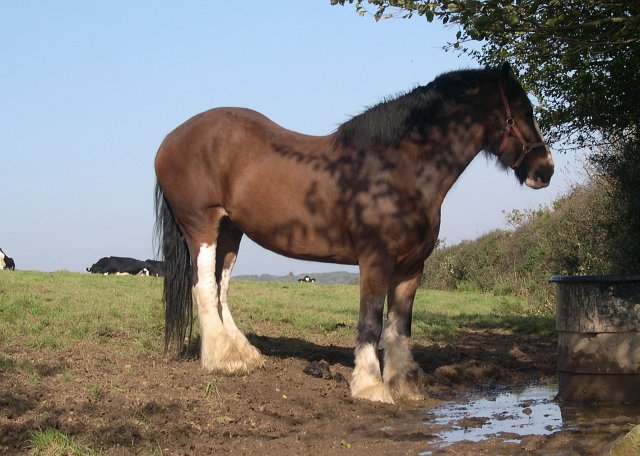
Shire | Riding Breed | 
| | Working Breed | 
| | Sport Breed | 
| | Show Breed |
| | Pony Breed |
| | Easily Trained |
| | Independant |
| | All Climates |
| | All Terrain |
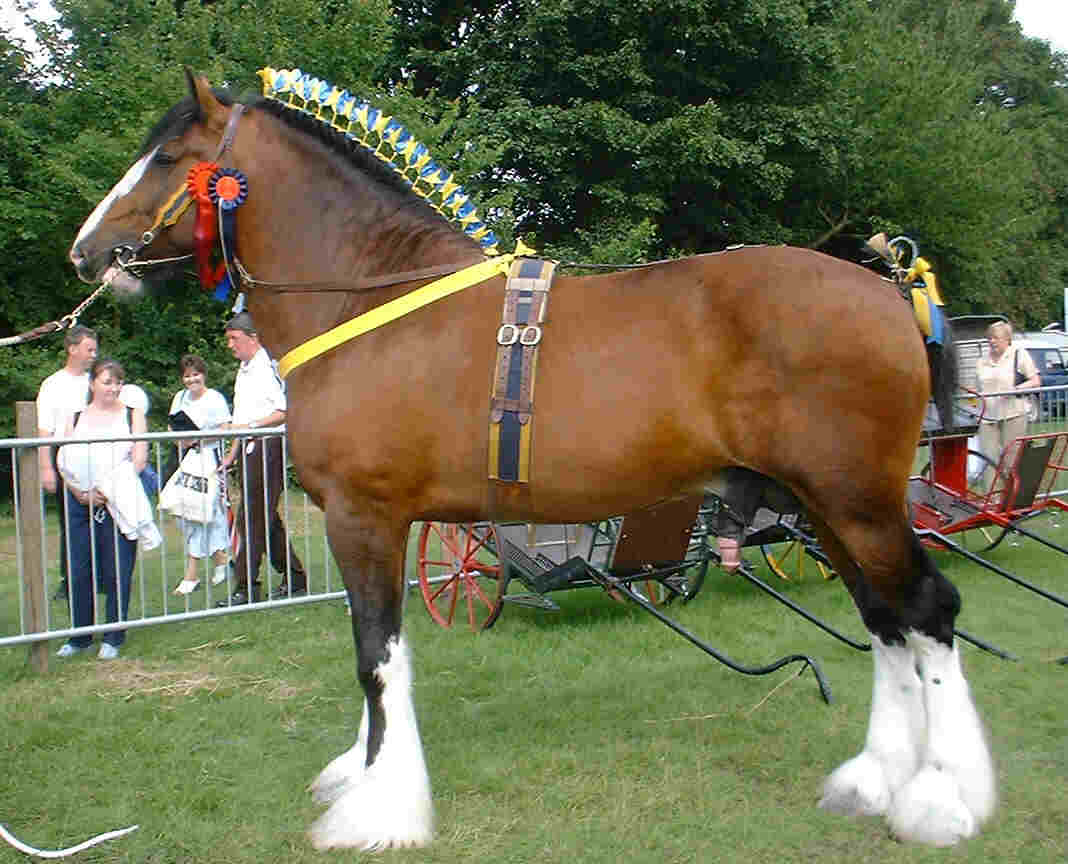
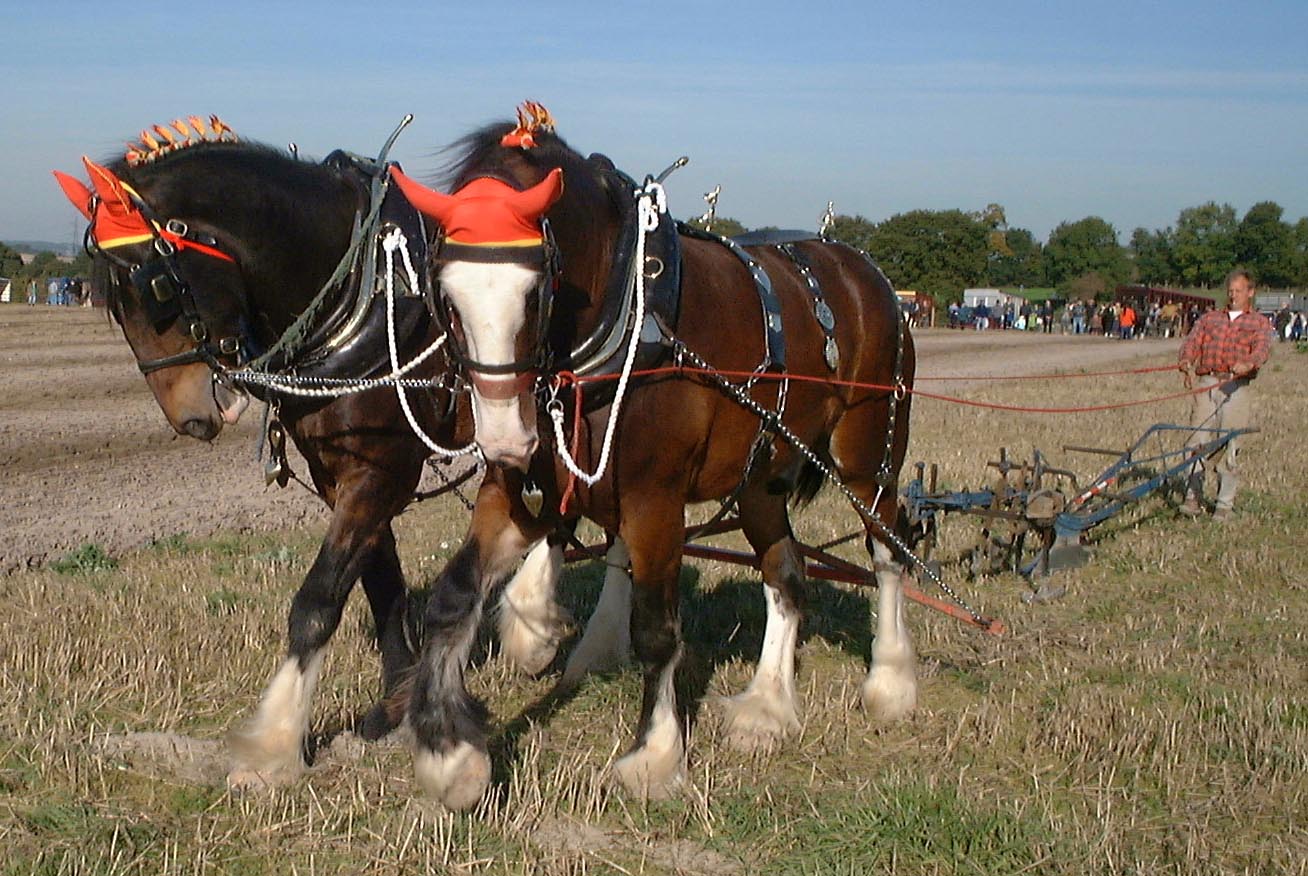
| Shire Qualities | The Shire horses can be used for harness work, agriculture, and for riding purposes. They can be found in Scotland, England, Ireland, Wales, and France. In all, the breed is better known in the lands of Nottingham, Derbyshire, Lincolnshire, and Leicestershire. They are a well known coach horse, and in England the many British breweries once depended heavily on the Shire horses as a form of transportation to get their supplies back and forth. | Shire Temperament | The Shire horses have a very kind and gentle temperament. They can be very popular working with children as their personalities can lead them to aid in learning how to ride a horse effectively and quickly. The more patient the horse is, the better off a child can learn, a quality this breed embodies. | Shire Appearance | The Shire horses stand at around seventeen hands at full grown size. They are bred in black, brown, and bay. They bode a lean head, longer necks, clean and lean legs, a long back loaded with muscle, wider shoulders, and open feet. Their backs are not noted as being dipped or roached for a horse their size. The breed is popular for their excellent amount of muscle, an accent that owners have made full use of. | Shire Upkeep | The Shire is a very simple breed to care for. They can easily be left alone, which makes tending to them a cinch. They can also find their own food and shelter when needed. | Shire History | The Shire horses came from the Midlands in England. They are based on the series of great horses brought to the land by a man named William the Conqueror sometime in 1066. This breed is without a doubt the longest style of horses that has ever been derived from England. They were bigger than the average breed in this area and also had a strong influence on the common breed, the Black Horse. Shires are considered dull in their fur coats, and some would even say in their personas. Then, during the eighteen hundreds, a man named Robert Bakewell came along and decided to breed the horses. As a result, a new style called the Bakewell Black variation was formed. Their studbook was created in the late eighteen hundreds and they went on to change the new name to the “English Cart Horse”, which was due to some finding it insulting for the horse to bode the title with the word ‘black’ in it. They were changed to a Shire horse style in 1885 and continued to be extremely popular. They went for a significant amount of money, these new shire styled horses, during The Great Depression. | Shire Photos Shire Videos |
| |